Two grade names circulate for one polyol ester refrigeration oil, and buyers keep treating them as alternatives. Sunice T-68 and Sunice SL-68S carry identical published specifications: 66.6 cSt at 40 °C, 8.2 cSt at 100 °C, density 0.960 g/cm³ at 15 °C, a pour point of −40 °C and a flash point of 254 °C. Japan Sun Oil markets the ISO VG 68 grade of its Sunice SL series as SL-68S, and T-68 is the same oil under the other designation.
Japan Sun Oil's product data settles the question without interpretation. The grade marketed as Sunice SL-68S in the synthetic SL series is the grade listed as Sunice T-68, and the specification is identical on both datasheets. A buyer comparing the two is comparing one oil with itself.
What follows from that is straightforward. If a system calls for a 68 cSt polyol ester from this manufacturer, either designation delivers it. The real question is what the container in front of you is printed with, not what is inside it.
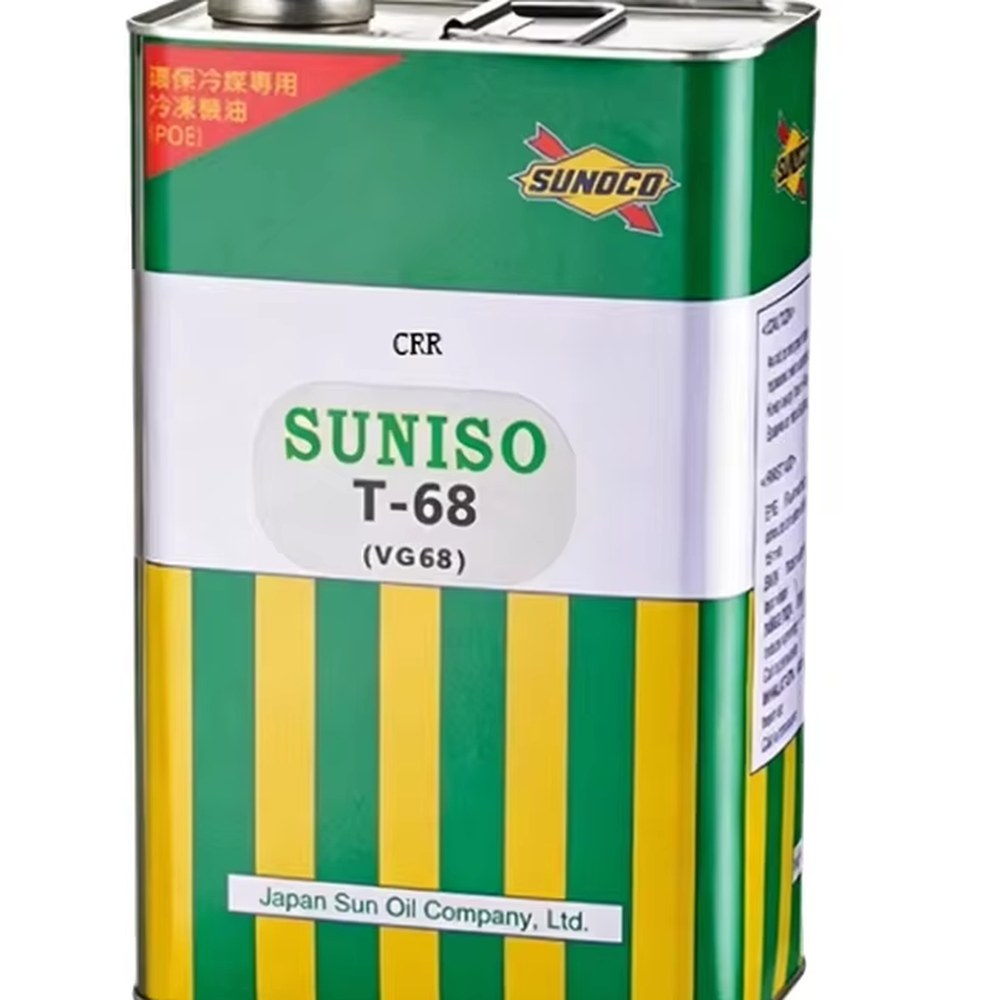
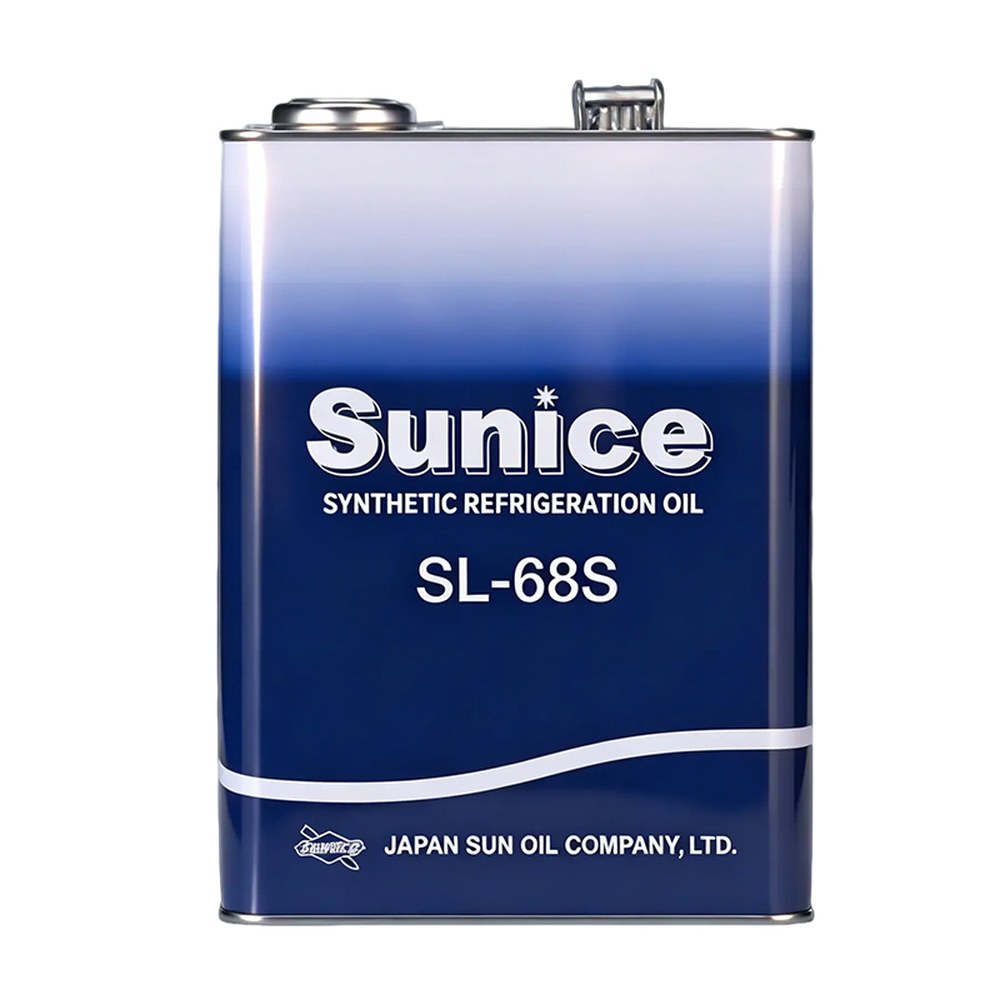
The can on the left prints SUNISO T-68 with (VG68) on the band below the grade name. The can on the right prints Sunice SL-68S. Both carry the same footer, Japan Sun Oil Company, Ltd.
Sunice is the newer name in this line. The synthetic series was sold as SUNISO SL until the brand name of the synthetic products changed in 2017, which is why older documents still say SUNISO where the current catalogue says Sunice. The T-68 artwork still prints SUNISO rather than Sunice.
Three strings of text therefore point at one fluid: Sunice SL-68S in the SL series, Sunice T-68 in the catalogue, and SUNISO T-68 on the container itself. A search for any of the three should land on the same specification, and this page is where they meet.
| Property | Sunice T-68 | Sunice SL-68S |
|---|---|---|
| Base oil | Synthetic polyol ester (POE) | Synthetic polyol ester (POE) |
| Kinematic viscosity at 40 °C | 66.6 cSt | 66.6 cSt |
| Kinematic viscosity at 100 °C | 8.2 cSt | 8.2 cSt |
| Density at 15 °C | 0.960 g/cm³ | 0.960 g/cm³ |
| Pour point | −40 °C | −40 °C |
| Flash point, COC | 254 °C | 254 °C |
| ISO viscosity class | ISO VG 68 | ISO VG 68 |
Nothing in that table separates the two products. Where they do differ is in the supply terms, not in the oil.
SL-68S is one of ten viscosity grades built on the same synthetic polyol ester, so the grades differ in thickness rather than in chemistry. The table is the line as Japan Sun Oil publishes it.
| Grade | Viscosity at 40 °C | ISO VG class |
|---|---|---|
| SL-10S | 10.1 cSt | ISO VG 10 |
| SL-22S | 22.5 cSt | ISO VG 22 |
| SL-32S | 32.3 cSt | ISO VG 32 |
| SL-46S | 45.8 cSt | ISO VG 46 |
| SL-68S | 66.6 cSt | ISO VG 68 |
| SL-100S | 98.1 cSt | ISO VG 100 |
| SL-120T | 115.8 cSt | Outside any ISO VG band |
| SL-170T | 161.0 cSt | ISO VG 150 |
| SL-220T | 216.0 cSt | ISO VG 220 |
| SL-320T | 310.0 cSt | ISO VG 320 |
The line spans 10 to 320 cSt, and the gap between 100S and 120T is where the suffix changes from S to T.
ISO 3448 defines bands rather than single viscosities. VG 68 covers 61.2 to 74.8 cSt at 40 °C, which is why 66.6 cSt sits inside it. Run the same arithmetic across the rest of the line and two grade names stop matching their bands.
SL-120T measures 115.8 cSt. VG 100 ends at 110 cSt and VG 150 begins at 135 cSt, so 115.8 falls in the space between two bands and the grade carries no ISO class at all. The manufacturer prints 120, and ISO 3448 has no class bearing that number.
SL-170T measures 161.0 cSt. VG 150 covers 135 to 165 cSt, so this is an ISO VG 150 oil sold under a name ending in 170. The ISO sequence runs 100, 150, 220, with no 170 in it. Anyone cross-referencing this grade against another maker's product should match on 150, not on 170.
Both of those sit in the T half of the line, but the suffix is not a reliable warning sign. SL-220T at 216.0 cSt falls inside VG 220, and SL-320T at 310.0 cSt falls inside VG 320. Read the viscosity, then the name.
A viscosity class is a band, and the four figures that decide whether a 68 cSt polyol ester suits a given circuit are the ones below.
| Parameter | Value | What it controls |
|---|---|---|
| Viscosity at 40 °C | 66.6 cSt | Film thickness in the bearings and the load the oil places on the compressor |
| Viscosity at 100 °C | 8.2 cSt | How much the film thins at operating temperature |
| Pour point | −40 °C | The cold end of the working window |
| Flash point (COC) | 254 °C | The hot end, and how the oil behaves at the discharge valve |
The 100 °C figure matters as much as the headline number. Two oils can both measure 66.6 cSt at 40 °C and behave differently at the discharge, which is why the second viscosity belongs on the datasheet beside the first. Raising viscosity raises the load on the machine, and on a system specified for a lighter oil that is the wrong direction of travel.
SL-46S measures 45.8 cSt and lands in VG 46, whose band runs 41.4 to 50.6 cSt. SL-100S measures 98.1 cSt and lands in VG 100, covering 90 to 110 cSt. A circuit specified for either of those will not be corrected by substituting SL-68S, because the difference is thickness and the compressor was sized around the film the original grade provides.
When the viscosity class on the nameplate is unreadable or was never recorded, the compressor model, the refrigerant and the operating temperatures are what settle the question. Those three inputs identify the duty, and the duty identifies the grade.
Sunice also includes a mineral line, the GS series, at 32, 56 and 100 cSt. Those are naphthenic mineral oils built for CFC, HCFC and natural refrigerants. They are not interchangeable with a polyol ester charge even at the same viscosity, because the base oil type decides whether the charge works at all.
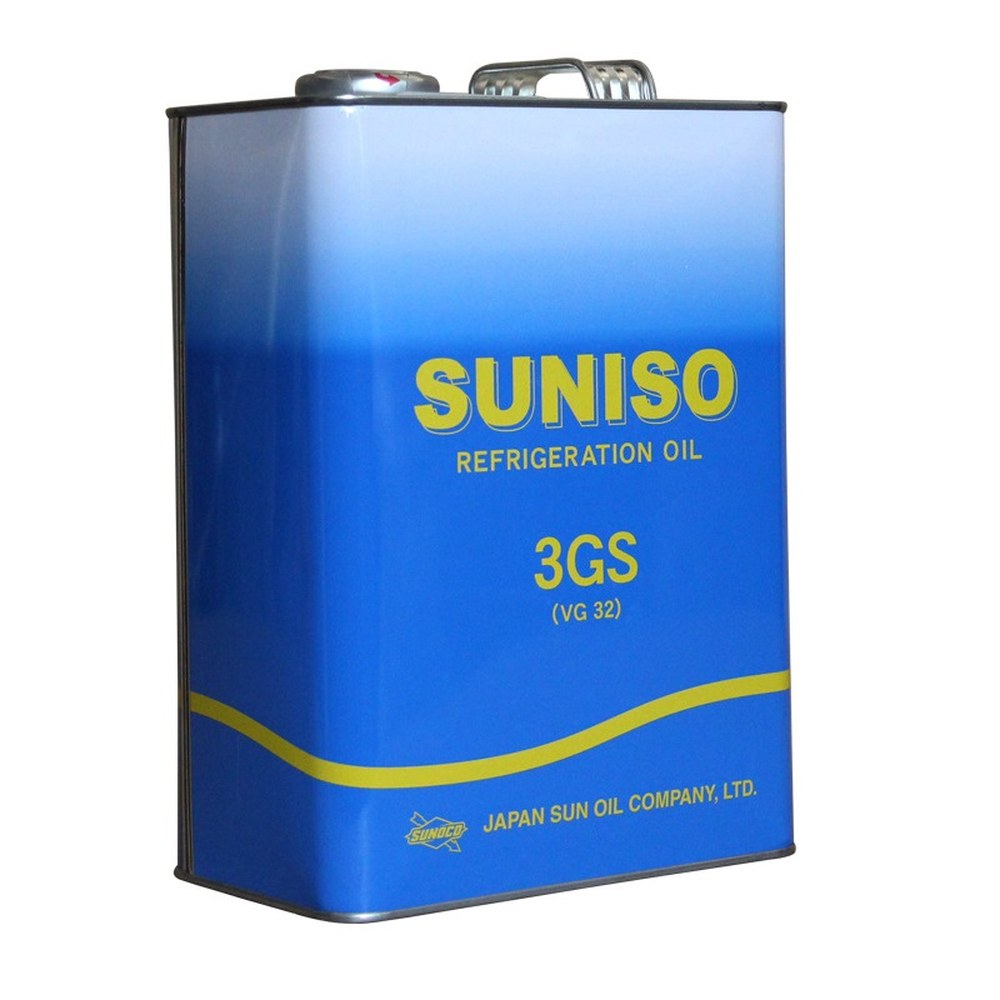
HFC and HFO refrigerants are not miscible with mineral oil. A mineral charge in an R-134a or R-407C circuit does not travel with the refrigerant: oil collects in the evaporator and the compressor sump runs dry. Polyol ester is miscible with those refrigerants, so the oil circulates through the circuit and returns to the sump. Converting a CFC or HCFC system to an HFC refrigerant therefore changes the oil as well as the gas, and the viscosity class is the second question, not the first.
This grade ships in two forms. One is the original SUNOCO product from Japan Sun Oil Company. The other is the equivalent 68 cSt polyol ester we blend at our own plant in Foshan, China, under our own designation QSL-68H. Both leave from Guangzhou, and the quotation states which is which rather than leaving the buyer to infer it from the price.
A quotation depends on the grade, the pack size and the destination port rather than on a list price. There is no fixed minimum order, because a single can and a full container load are both workable and the figure moves with the pack size and the destination. Send the compressor model, the refrigerant and the operating temperatures, and we will confirm the viscosity class against the Japan Sun Oil data before quoting. A technical data sheet and a safety data sheet come with the quotation.
Yes. Japan Sun Oil markets the ISO VG 68 grade of its Sunice SL series as SL-68S, and the same polyol ester specification is listed as Sunice T-68. Both carry 66.6 cSt at 40 °C, 8.2 cSt at 100 °C, density 0.960 g/cm³ at 15 °C, a pour point of −40 °C and a flash point of 254 °C.
Either designation reaches the same ISO VG 68 polyol ester. Order under whichever name appears on your specification or purchase order, and confirm the pack size and the container artwork at quotation, since the T-68 can prints SUNISO while the SL-68S can prints Sunice.
Yes. Its measured viscosity of 66.6 cSt at 40 °C falls inside the ISO VG 68 band of 61.2 to 74.8 cSt defined by ISO 3448. The manufacturer's grade name and the ISO class agree for this grade, which is not true of every grade in the line.
Only if the refrigerant has also changed. Polyol ester and mineral oil are not interchangeable at the same viscosity, because HFC and HFO refrigerants are not miscible with mineral oil. A CFC or HCFC system converted to an HFC refrigerant needs a polyol ester charge as part of the conversion, and the viscosity class is confirmed separately.
The suffix changes between SL-100S and SL-120T, and it is a naming convention rather than a specification. All ten grades are the same synthetic polyol ester, and the letter does not tell you whether the number in the name matches an ISO band. SL-120T at 115.8 cSt sits outside any ISO band and SL-170T at 161.0 cSt is an ISO VG 150 oil despite the 170 in its name, while SL-220T and SL-320T match their bands. Read the viscosity, then read the name.
---
Copyright & Citation Notice. This article is original content published by QishanrLubricants (Guangzhou Qishanr Technologies Co., Ltd.) at qishanrlubricants.com. Product data is quoted from Japan Sun Oil Company, Ltd. product information for the Sunice T-68 and Sunice SL-68S grades, and viscosity classes are assigned from the measured viscosity using the bands of ISO 3448:1992. Quotation of up to 200 words with attribution and a link to this page is permitted for commercial and technical reference; reproduction in full requires written permission.